Product Design
Staffing Platform Evolution
Modernizing a complex staffing experience through gradual UX and UI evolution.
Year :
2019
Industry :
Staffing and Recruiting
Client :
ADIA
Project Duration :
1 year
Problem Statement
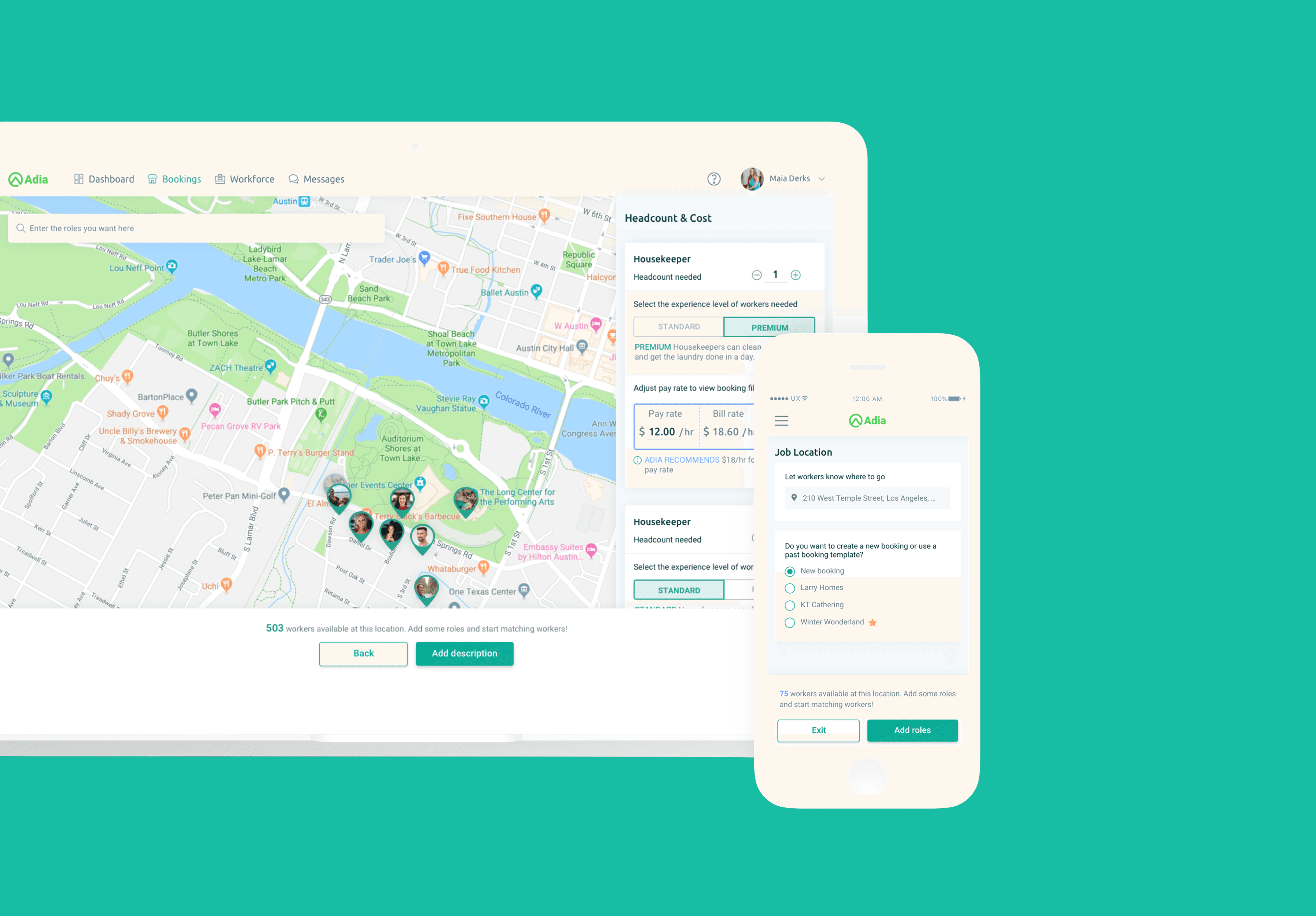
The staffing platform required a visual evolution to modernize its look and feel and align with updated brand direction. However, the product operated on a shared component ecosystem used across multiple workflows, making a full redesign high-risk and potentially disruptive to existing users.
The challenge was to introduce a refreshed visual language without destabilizing established interaction patterns or breaking consistency across shared components.
Without a structured transition strategy, the platform risked visual fragmentation, workflow disruption, and increased technical overhead — undermining both user confidence and system integrity.
Approach
Phased Modernization Strategy
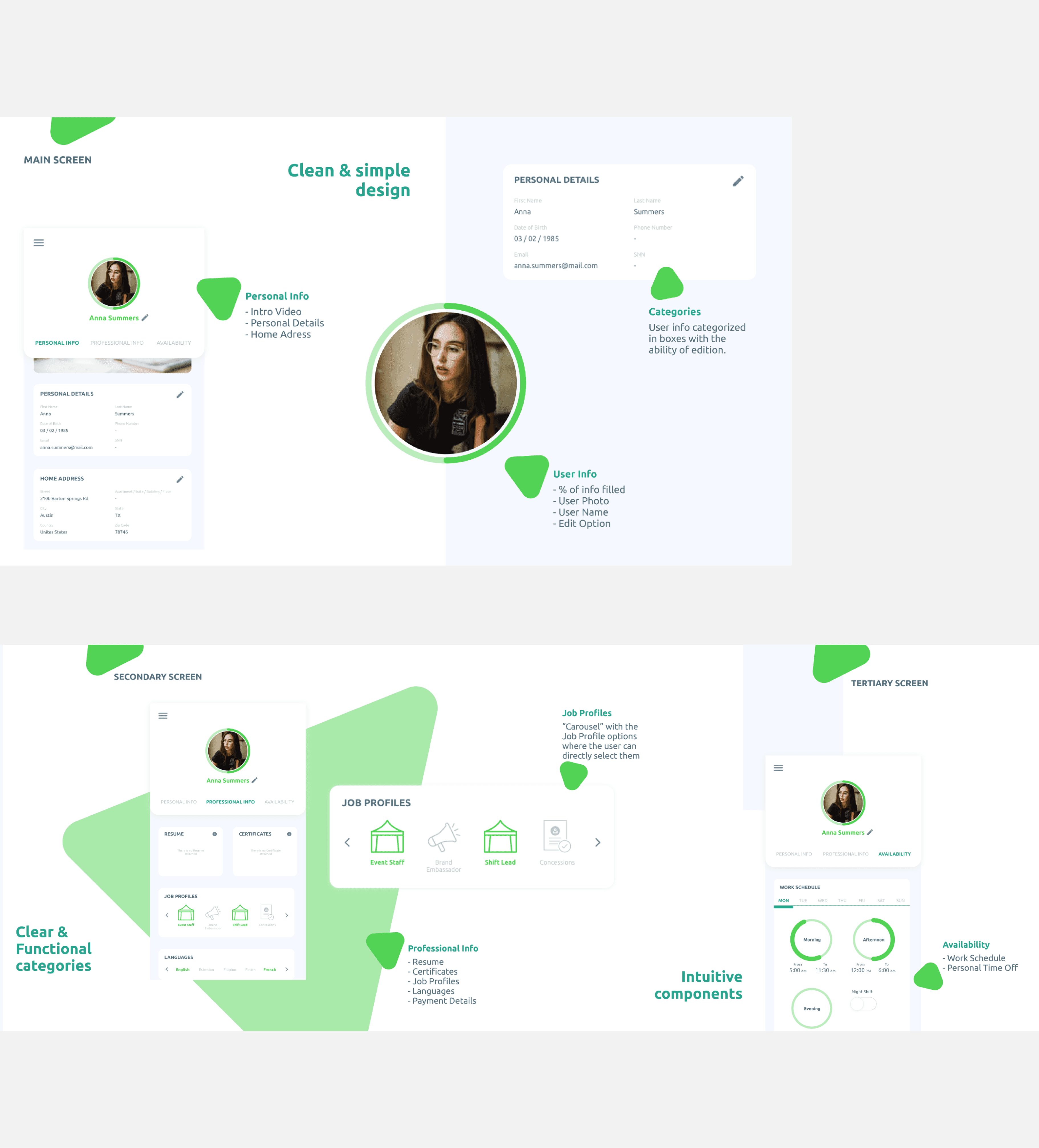
Rather than a disruptive redesign, we introduced a new visual language incrementally across three interconnected platforms: Worker, Business, and Staffing Manager.
To avoid destabilizing shared components or interrupting delivery, I worked feature by feature — aligning scope with business priorities while protecting system consistency.
Structured Delivery Rhythm
Each feature followed a clear framework:
1. Problem Definition
For every user story, we identified friction points (visual inconsistency, dense layouts, unclear steps), mapped flows, and aligned on MVP scope. Because each platform served a different persona, interaction logic was evaluated by role and context. Responsive behavior was considered from mobile to desktop at every stage.
2. Ideation
I benchmarked patterns, explored interaction models, and created low-fidelity wireframes in collaborative formats to accelerate early feedback and reduce downstream rework.
3. Design & Gradual Integration
High-fidelity mockups and interaction flows were developed with a focus on progressive adoption. Shared components were carefully evaluated to determine sequencing — identifying which could transition immediately and which required phased updates.
4. Implementation & QA
I partnered closely with engineering during development, validating edge cases, reviewing implementation, and ensuring cross-platform consistency before release.
The emphasis was on controlled evolution — modernizing the experience without compromising platform stability.
Outcome & Impact
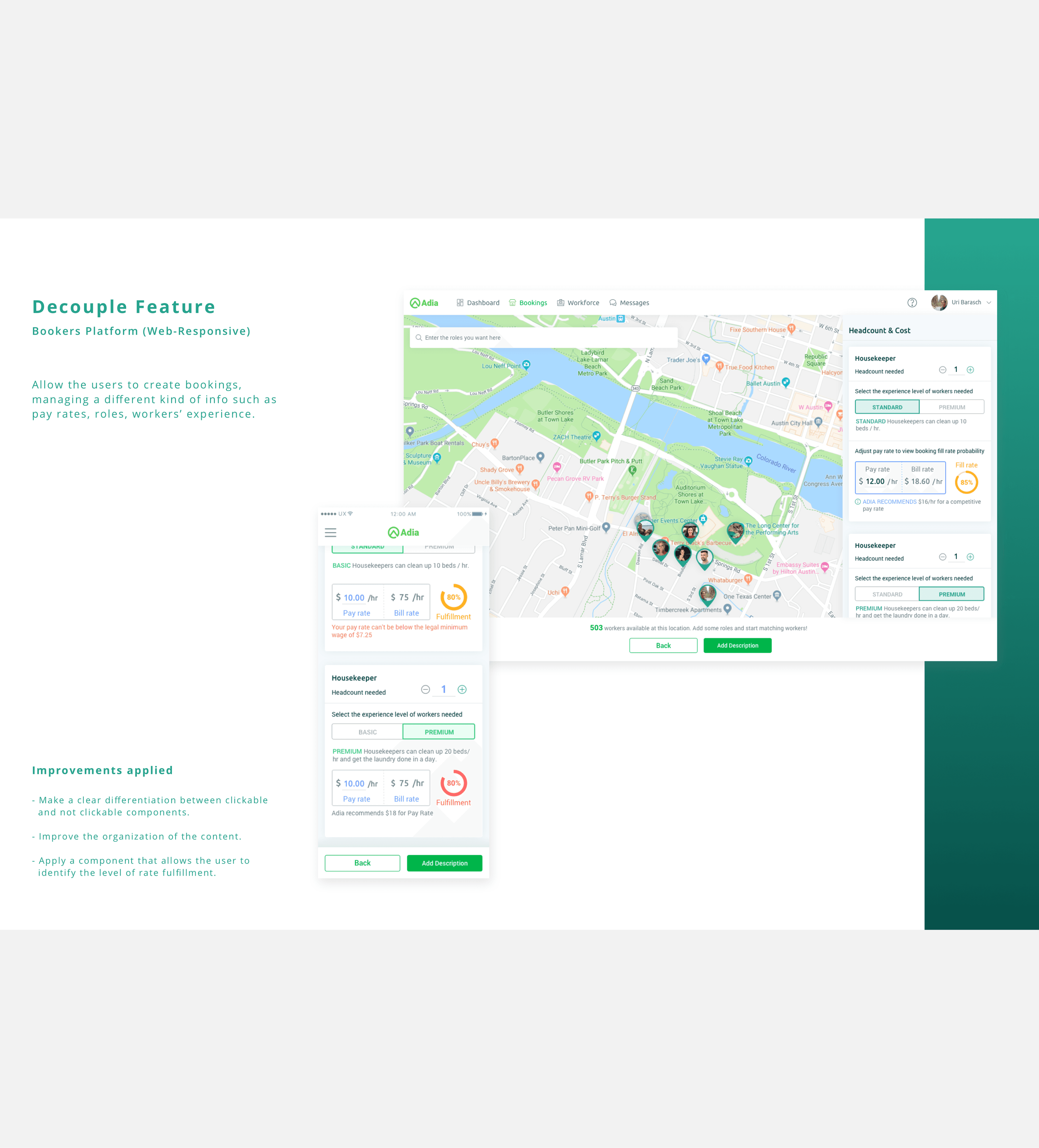
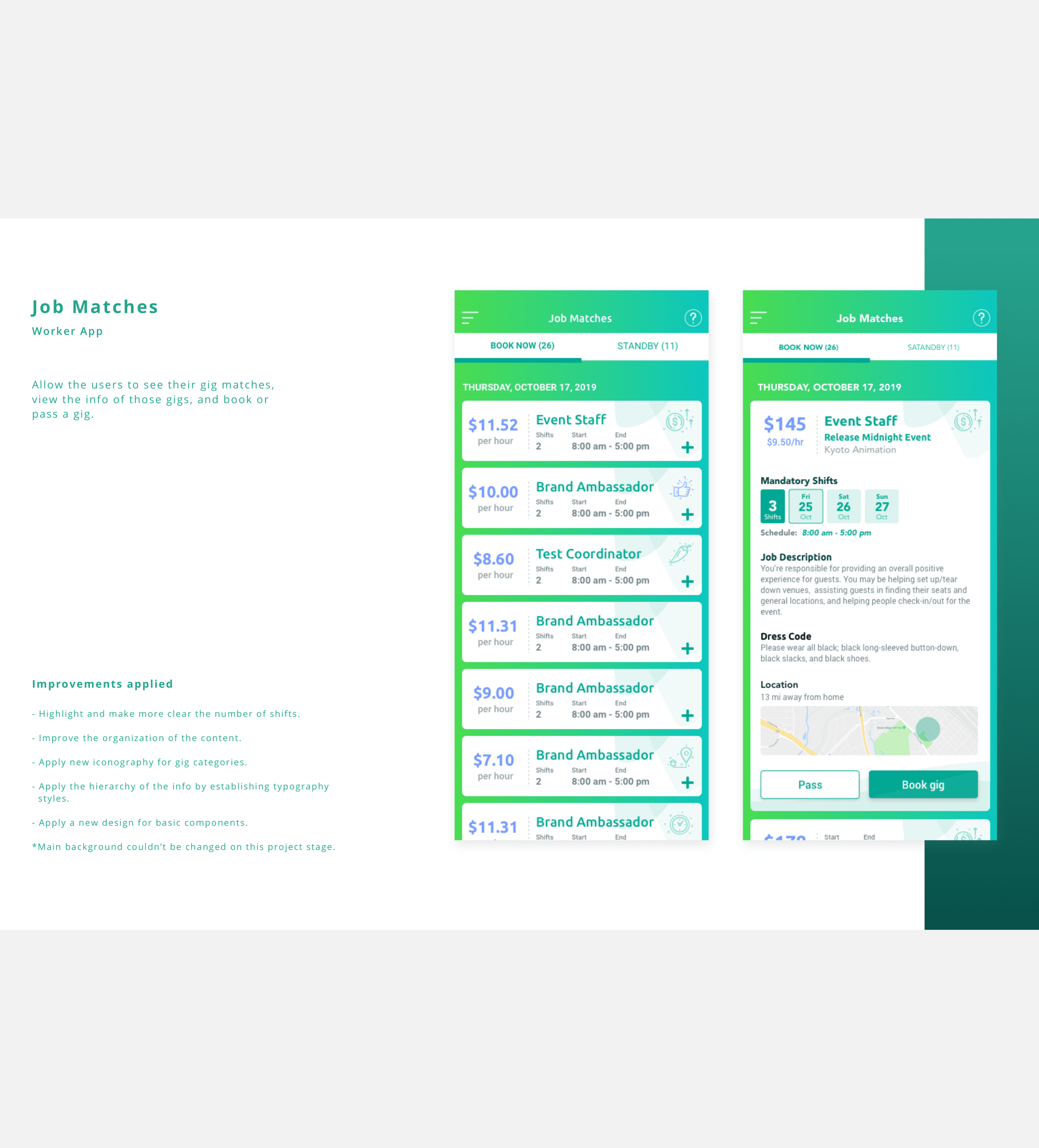
The initiative delivered a cleaner, more structured, and scalable experience across the staffing ecosystem.
Key outcomes included:
A unified visual language (color, typography, spacing, iconography) across three platforms
Simplified, clearer task flows tailored to each persona
Defined component behaviors based on status and context
Improved readability and accessibility through stronger hierarchy and contrast
Reusable UI patterns that strengthened the shared component ecosystem
Improved design–engineering alignment through early technical collaboration and continuous QA
For users, the platform became more intuitive and efficient across roles.
For the organization, the phased rollout preserved system integrity while modernizing the product — creating a scalable foundation for future evolution without operational disruption.
Lessons Learned
1. Research grounds evolution.
Even when direct interviews weren’t always possible, combining surveys, user feedback, and analytics ensured modernization decisions were rooted in real behavior — not aesthetics. In shared ecosystems, even small UI changes can impact workflows, so grounding them in evidence is critical.
2. Personas prevent one-size-fits-all design.
With three platforms serving distinct roles, persona clarity was essential. The same feature often required different interaction logic depending on context. Designing with role awareness preserved workflow integrity and avoided oversimplification.
3. Modernization must be sequenced.
Introducing a new visual language across a shared component ecosystem requires intentional phasing. Gradual adoption protected system stability while enabling meaningful evolution.
4. Scalability starts at the component level.
Thinking ahead about responsiveness, reuse, and system impact reduced rework and design drift. Even visual updates were approached as system-level decisions, not isolated screen changes.
5. Communication sustains momentum.
Continuous alignment with product and engineering reduced friction and prevented downstream misinterpretation. In shared ecosystems, early technical collaboration is foundational — not optional.
Evolving a large, shared platform requires more than aesthetic updates — it requires systems thinking. By sequencing change, grounding decisions in real workflows, and protecting component integrity, we modernized the experience while preserving operational stability.
Strong product design is not about redesigning everything — it’s about knowing what to change, when to change it, and how to scale it responsibly.
More Projects
Product Design
Staffing Platform Evolution
Modernizing a complex staffing experience through gradual UX and UI evolution.
Year :
2019
Industry :
Staffing and Recruiting
Client :
ADIA
Project Duration :
1 year
Problem Statement
The staffing platform required a visual evolution to modernize its look and feel and align with updated brand direction. However, the product operated on a shared component ecosystem used across multiple workflows, making a full redesign high-risk and potentially disruptive to existing users.
The challenge was to introduce a refreshed visual language without destabilizing established interaction patterns or breaking consistency across shared components.
Without a structured transition strategy, the platform risked visual fragmentation, workflow disruption, and increased technical overhead — undermining both user confidence and system integrity.
Approach
Phased Modernization Strategy
Rather than a disruptive redesign, we introduced a new visual language incrementally across three interconnected platforms: Worker, Business, and Staffing Manager.
To avoid destabilizing shared components or interrupting delivery, I worked feature by feature — aligning scope with business priorities while protecting system consistency.
Structured Delivery Rhythm
Each feature followed a clear framework:
1. Problem Definition
For every user story, we identified friction points (visual inconsistency, dense layouts, unclear steps), mapped flows, and aligned on MVP scope. Because each platform served a different persona, interaction logic was evaluated by role and context. Responsive behavior was considered from mobile to desktop at every stage.
2. Ideation
I benchmarked patterns, explored interaction models, and created low-fidelity wireframes in collaborative formats to accelerate early feedback and reduce downstream rework.
3. Design & Gradual Integration
High-fidelity mockups and interaction flows were developed with a focus on progressive adoption. Shared components were carefully evaluated to determine sequencing — identifying which could transition immediately and which required phased updates.
4. Implementation & QA
I partnered closely with engineering during development, validating edge cases, reviewing implementation, and ensuring cross-platform consistency before release.
The emphasis was on controlled evolution — modernizing the experience without compromising platform stability.
Outcome & Impact
The initiative delivered a cleaner, more structured, and scalable experience across the staffing ecosystem.
Key outcomes included:
A unified visual language (color, typography, spacing, iconography) across three platforms
Simplified, clearer task flows tailored to each persona
Defined component behaviors based on status and context
Improved readability and accessibility through stronger hierarchy and contrast
Reusable UI patterns that strengthened the shared component ecosystem
Improved design–engineering alignment through early technical collaboration and continuous QA
For users, the platform became more intuitive and efficient across roles.
For the organization, the phased rollout preserved system integrity while modernizing the product — creating a scalable foundation for future evolution without operational disruption.
Lessons Learned
1. Research grounds evolution.
Even when direct interviews weren’t always possible, combining surveys, user feedback, and analytics ensured modernization decisions were rooted in real behavior — not aesthetics. In shared ecosystems, even small UI changes can impact workflows, so grounding them in evidence is critical.
2. Personas prevent one-size-fits-all design.
With three platforms serving distinct roles, persona clarity was essential. The same feature often required different interaction logic depending on context. Designing with role awareness preserved workflow integrity and avoided oversimplification.
3. Modernization must be sequenced.
Introducing a new visual language across a shared component ecosystem requires intentional phasing. Gradual adoption protected system stability while enabling meaningful evolution.
4. Scalability starts at the component level.
Thinking ahead about responsiveness, reuse, and system impact reduced rework and design drift. Even visual updates were approached as system-level decisions, not isolated screen changes.
5. Communication sustains momentum.
Continuous alignment with product and engineering reduced friction and prevented downstream misinterpretation. In shared ecosystems, early technical collaboration is foundational — not optional.
Evolving a large, shared platform requires more than aesthetic updates — it requires systems thinking. By sequencing change, grounding decisions in real workflows, and protecting component integrity, we modernized the experience while preserving operational stability.
Strong product design is not about redesigning everything — it’s about knowing what to change, when to change it, and how to scale it responsibly.
More Projects
Product Design
Staffing Platform Evolution
Modernizing a complex staffing experience through gradual UX and UI evolution.
Year :
2019
Industry :
Staffing and Recruiting
Client :
ADIA
Project Duration :
1 year
Problem Statement
The staffing platform required a visual evolution to modernize its look and feel and align with updated brand direction. However, the product operated on a shared component ecosystem used across multiple workflows, making a full redesign high-risk and potentially disruptive to existing users.
The challenge was to introduce a refreshed visual language without destabilizing established interaction patterns or breaking consistency across shared components.
Without a structured transition strategy, the platform risked visual fragmentation, workflow disruption, and increased technical overhead — undermining both user confidence and system integrity.
Approach
Phased Modernization Strategy
Rather than a disruptive redesign, we introduced a new visual language incrementally across three interconnected platforms: Worker, Business, and Staffing Manager.
To avoid destabilizing shared components or interrupting delivery, I worked feature by feature — aligning scope with business priorities while protecting system consistency.
Structured Delivery Rhythm
Each feature followed a clear framework:
1. Problem Definition
For every user story, we identified friction points (visual inconsistency, dense layouts, unclear steps), mapped flows, and aligned on MVP scope. Because each platform served a different persona, interaction logic was evaluated by role and context. Responsive behavior was considered from mobile to desktop at every stage.
2. Ideation
I benchmarked patterns, explored interaction models, and created low-fidelity wireframes in collaborative formats to accelerate early feedback and reduce downstream rework.
3. Design & Gradual Integration
High-fidelity mockups and interaction flows were developed with a focus on progressive adoption. Shared components were carefully evaluated to determine sequencing — identifying which could transition immediately and which required phased updates.
4. Implementation & QA
I partnered closely with engineering during development, validating edge cases, reviewing implementation, and ensuring cross-platform consistency before release.
The emphasis was on controlled evolution — modernizing the experience without compromising platform stability.
Outcome & Impact
The initiative delivered a cleaner, more structured, and scalable experience across the staffing ecosystem.
Key outcomes included:
A unified visual language (color, typography, spacing, iconography) across three platforms
Simplified, clearer task flows tailored to each persona
Defined component behaviors based on status and context
Improved readability and accessibility through stronger hierarchy and contrast
Reusable UI patterns that strengthened the shared component ecosystem
Improved design–engineering alignment through early technical collaboration and continuous QA
For users, the platform became more intuitive and efficient across roles.
For the organization, the phased rollout preserved system integrity while modernizing the product — creating a scalable foundation for future evolution without operational disruption.
Lessons Learned
1. Research grounds evolution.
Even when direct interviews weren’t always possible, combining surveys, user feedback, and analytics ensured modernization decisions were rooted in real behavior — not aesthetics. In shared ecosystems, even small UI changes can impact workflows, so grounding them in evidence is critical.
2. Personas prevent one-size-fits-all design.
With three platforms serving distinct roles, persona clarity was essential. The same feature often required different interaction logic depending on context. Designing with role awareness preserved workflow integrity and avoided oversimplification.
3. Modernization must be sequenced.
Introducing a new visual language across a shared component ecosystem requires intentional phasing. Gradual adoption protected system stability while enabling meaningful evolution.
4. Scalability starts at the component level.
Thinking ahead about responsiveness, reuse, and system impact reduced rework and design drift. Even visual updates were approached as system-level decisions, not isolated screen changes.
5. Communication sustains momentum.
Continuous alignment with product and engineering reduced friction and prevented downstream misinterpretation. In shared ecosystems, early technical collaboration is foundational — not optional.
Evolving a large, shared platform requires more than aesthetic updates — it requires systems thinking. By sequencing change, grounding decisions in real workflows, and protecting component integrity, we modernized the experience while preserving operational stability.
Strong product design is not about redesigning everything — it’s about knowing what to change, when to change it, and how to scale it responsibly.