Product Design
Design System Redesign
Building a scalable, accessible design foundation for a high-traffic e-commerce platform.
Year :
2020
Industry :
Electronics / E-Commerce
Client :
Arrow Electronics
Project Duration :
1 year
Problem Statement
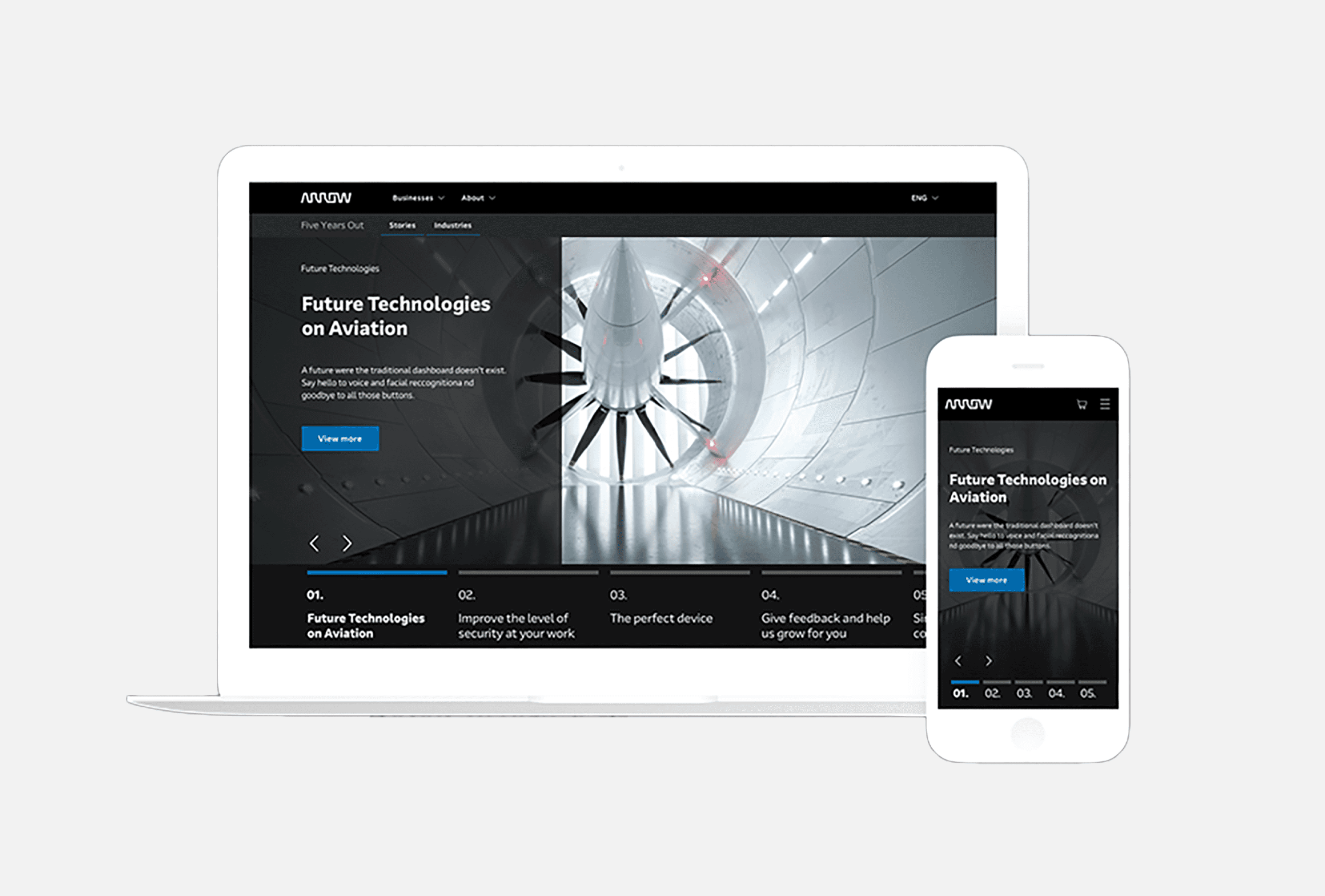
As the e-commerce platform scaled across categories, devices, and a diverse user base, experience consistency and accessibility began to fragment.
Interaction patterns, responsiveness, and accessibility standards were not uniformly applied, creating usability gaps and increasing design and development inefficiencies. Growth amplified the issue — exposing the absence of a scalable, governed design foundation.
Without a structured system to ensure consistency and inclusivity at scale, the platform risked degraded user experience, reduced accessibility compliance, and mounting operational complexity in a high-traffic environment.
My Role
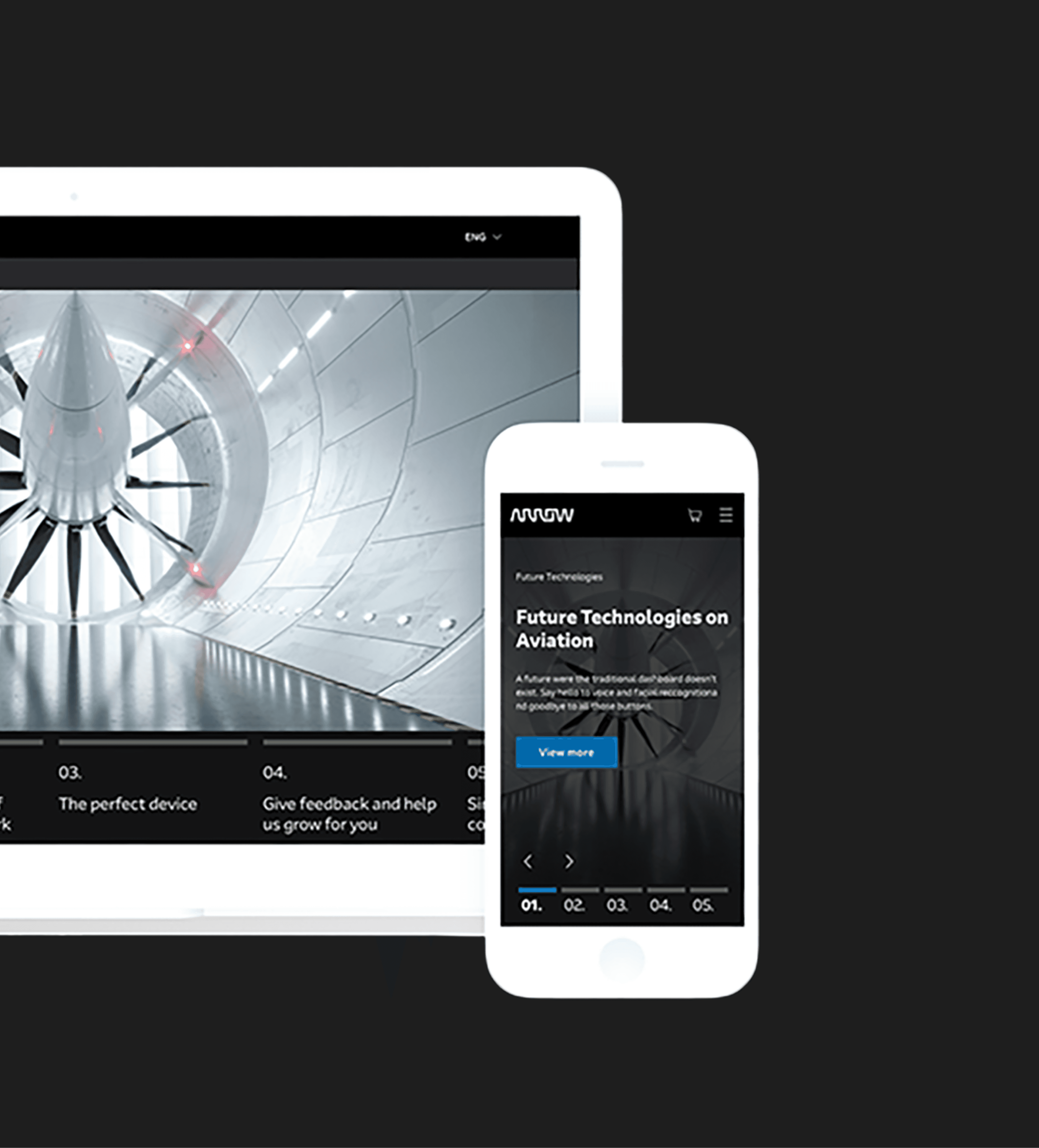
I drove the effort to strengthen the platform’s design foundation, aligning accessibility, responsiveness, and design system standards across a large-scale e-commerce ecosystem.
Rather than focusing on isolated screens, I worked at the systems level — defining scalable UI patterns, reinforcing accessibility best practices, and introducing responsive behaviors that could support growth across devices and user contexts.
I translated these principles into high-fidelity prototypes, validated them through user testing, and established documentation and implementation guidelines to ensure consistency across teams.
This work improved compliance and usability while creating a more sustainable, scalable framework for future product expansion.
Approach
System Audit & Standards Alignment
I began by auditing key flows and components across the platform to identify inconsistencies in interaction patterns, responsive behavior, and accessibility compliance.
This revealed fragmentation in how components adapted across breakpoints, gaps in accessibility standards (contrast, focus states, semantic structure), and variability in implementation across teams.
Scalable Pattern Definition
Rather than addressing issues case by case, I focused on defining reusable, system-level solutions:
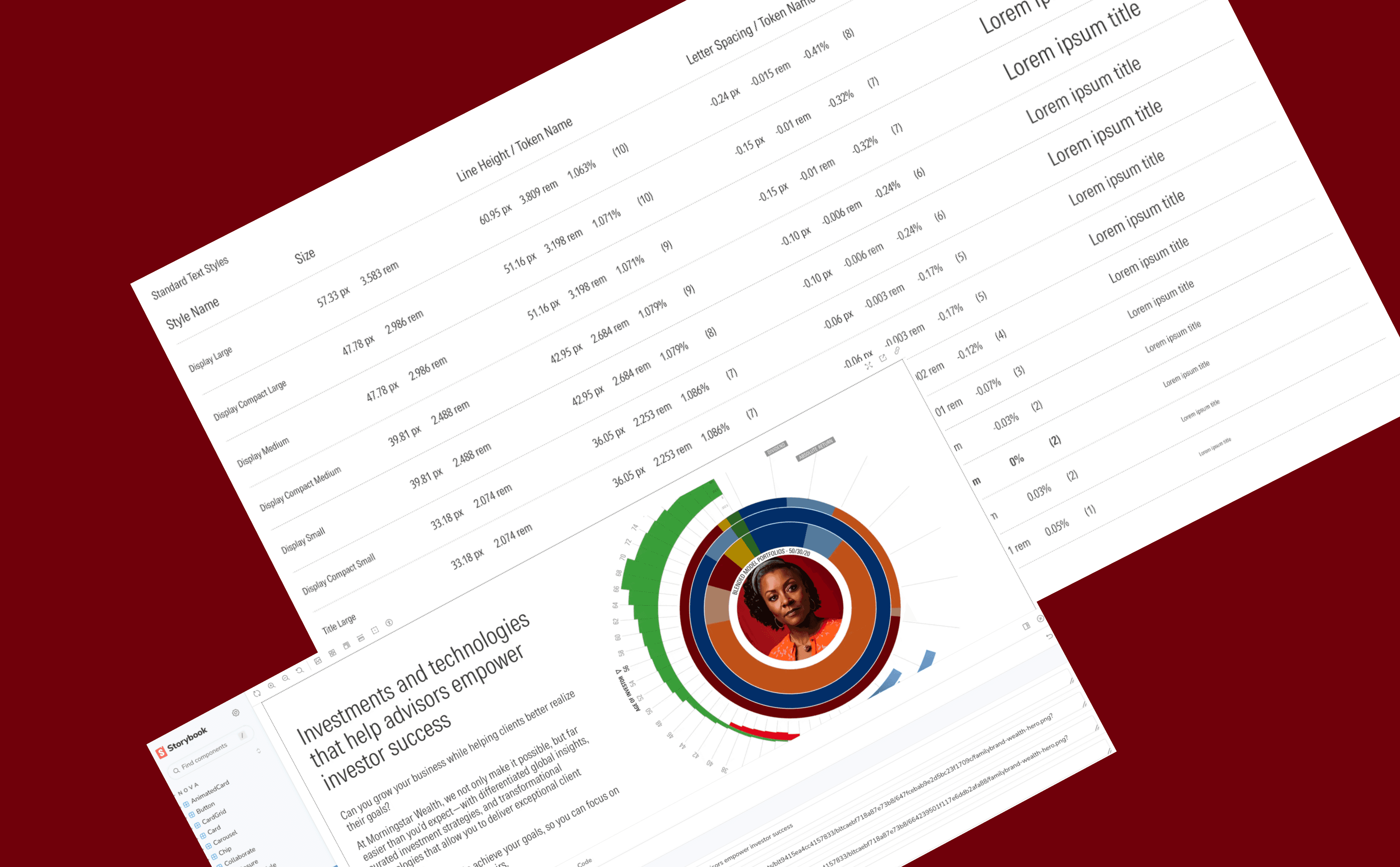
Standardized responsive behaviors across core components
Reinforced accessibility best practices (WCAG-aligned contrast, keyboard navigation, focus management)
Introduced consistent layout and spacing patterns
Strengthened documentation to guide implementation
Each improvement was designed to be reusable and extensible — reducing design drift as the platform evolved.
Validation & Governance
Prototypes were validated through user testing to ensure improvements translated into measurable clarity and usability.
Clear guidelines and documentation were delivered to support engineering alignment and consistent adoption, embedding accessibility and responsiveness into the design system rather than treating them as retroactive fixes.
Outcome & Impact
The initiative strengthened the platform’s design foundation, embedding accessibility and responsiveness as core system principles rather than post-launch adjustments.
Key outcomes included:
Improved accessibility compliance across core user flows
Standardized responsive behavior across devices and breakpoints
Reduced design inconsistencies through reusable, documented patterns
Increased implementation alignment between design and engineering
Established clearer governance for future feature expansion
For users, the experience became more inclusive, predictable, and usable across devices.
For the organization, the work reduced design drift, improved maintainability, and created a scalable framework capable of supporting continued growth in a high-traffic e-commerce environment.
More Projects
Product Design
Design System Redesign
Building a scalable, accessible design foundation for a high-traffic e-commerce platform.
Year :
2020
Industry :
Electronics / E-Commerce
Client :
Arrow Electronics
Project Duration :
1 year
Problem Statement
As the e-commerce platform scaled across categories, devices, and a diverse user base, experience consistency and accessibility began to fragment.
Interaction patterns, responsiveness, and accessibility standards were not uniformly applied, creating usability gaps and increasing design and development inefficiencies. Growth amplified the issue — exposing the absence of a scalable, governed design foundation.
Without a structured system to ensure consistency and inclusivity at scale, the platform risked degraded user experience, reduced accessibility compliance, and mounting operational complexity in a high-traffic environment.
My Role
I drove the effort to strengthen the platform’s design foundation, aligning accessibility, responsiveness, and design system standards across a large-scale e-commerce ecosystem.
Rather than focusing on isolated screens, I worked at the systems level — defining scalable UI patterns, reinforcing accessibility best practices, and introducing responsive behaviors that could support growth across devices and user contexts.
I translated these principles into high-fidelity prototypes, validated them through user testing, and established documentation and implementation guidelines to ensure consistency across teams.
This work improved compliance and usability while creating a more sustainable, scalable framework for future product expansion.
Approach
System Audit & Standards Alignment
I began by auditing key flows and components across the platform to identify inconsistencies in interaction patterns, responsive behavior, and accessibility compliance.
This revealed fragmentation in how components adapted across breakpoints, gaps in accessibility standards (contrast, focus states, semantic structure), and variability in implementation across teams.
Scalable Pattern Definition
Rather than addressing issues case by case, I focused on defining reusable, system-level solutions:
Standardized responsive behaviors across core components
Reinforced accessibility best practices (WCAG-aligned contrast, keyboard navigation, focus management)
Introduced consistent layout and spacing patterns
Strengthened documentation to guide implementation
Each improvement was designed to be reusable and extensible — reducing design drift as the platform evolved.
Validation & Governance
Prototypes were validated through user testing to ensure improvements translated into measurable clarity and usability.
Clear guidelines and documentation were delivered to support engineering alignment and consistent adoption, embedding accessibility and responsiveness into the design system rather than treating them as retroactive fixes.
Outcome & Impact
The initiative strengthened the platform’s design foundation, embedding accessibility and responsiveness as core system principles rather than post-launch adjustments.
Key outcomes included:
Improved accessibility compliance across core user flows
Standardized responsive behavior across devices and breakpoints
Reduced design inconsistencies through reusable, documented patterns
Increased implementation alignment between design and engineering
Established clearer governance for future feature expansion
For users, the experience became more inclusive, predictable, and usable across devices.
For the organization, the work reduced design drift, improved maintainability, and created a scalable framework capable of supporting continued growth in a high-traffic e-commerce environment.
More Projects
Product Design
Design System Redesign
Building a scalable, accessible design foundation for a high-traffic e-commerce platform.
Year :
2020
Industry :
Electronics / E-Commerce
Client :
Arrow Electronics
Project Duration :
1 year
Problem Statement
As the e-commerce platform scaled across categories, devices, and a diverse user base, experience consistency and accessibility began to fragment.
Interaction patterns, responsiveness, and accessibility standards were not uniformly applied, creating usability gaps and increasing design and development inefficiencies. Growth amplified the issue — exposing the absence of a scalable, governed design foundation.
Without a structured system to ensure consistency and inclusivity at scale, the platform risked degraded user experience, reduced accessibility compliance, and mounting operational complexity in a high-traffic environment.
My Role
I drove the effort to strengthen the platform’s design foundation, aligning accessibility, responsiveness, and design system standards across a large-scale e-commerce ecosystem.
Rather than focusing on isolated screens, I worked at the systems level — defining scalable UI patterns, reinforcing accessibility best practices, and introducing responsive behaviors that could support growth across devices and user contexts.
I translated these principles into high-fidelity prototypes, validated them through user testing, and established documentation and implementation guidelines to ensure consistency across teams.
This work improved compliance and usability while creating a more sustainable, scalable framework for future product expansion.
Approach
System Audit & Standards Alignment
I began by auditing key flows and components across the platform to identify inconsistencies in interaction patterns, responsive behavior, and accessibility compliance.
This revealed fragmentation in how components adapted across breakpoints, gaps in accessibility standards (contrast, focus states, semantic structure), and variability in implementation across teams.
Scalable Pattern Definition
Rather than addressing issues case by case, I focused on defining reusable, system-level solutions:
Standardized responsive behaviors across core components
Reinforced accessibility best practices (WCAG-aligned contrast, keyboard navigation, focus management)
Introduced consistent layout and spacing patterns
Strengthened documentation to guide implementation
Each improvement was designed to be reusable and extensible — reducing design drift as the platform evolved.
Validation & Governance
Prototypes were validated through user testing to ensure improvements translated into measurable clarity and usability.
Clear guidelines and documentation were delivered to support engineering alignment and consistent adoption, embedding accessibility and responsiveness into the design system rather than treating them as retroactive fixes.
Outcome & Impact
The initiative strengthened the platform’s design foundation, embedding accessibility and responsiveness as core system principles rather than post-launch adjustments.
Key outcomes included:
Improved accessibility compliance across core user flows
Standardized responsive behavior across devices and breakpoints
Reduced design inconsistencies through reusable, documented patterns
Increased implementation alignment between design and engineering
Established clearer governance for future feature expansion
For users, the experience became more inclusive, predictable, and usable across devices.
For the organization, the work reduced design drift, improved maintainability, and created a scalable framework capable of supporting continued growth in a high-traffic e-commerce environment.