Product Design
COMMUNICATION & PROCESS OPS
Improving Cross-Functional Communication & Processes
Year :
2024
Industry :
Financial Services
Client :
Corpweb
Project Duration :
2 years
Problem Statement
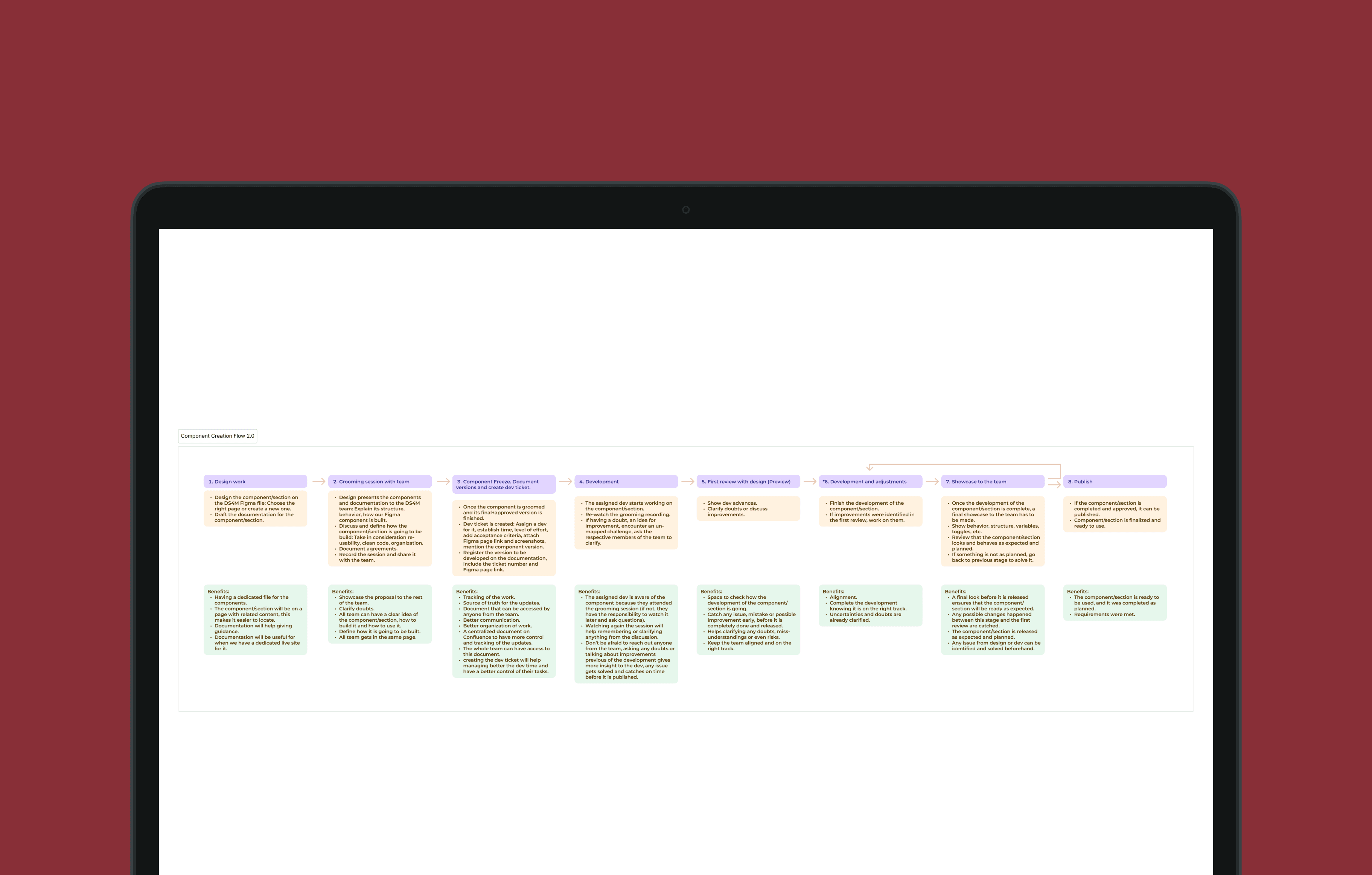
While design, engineering, and product teams were producing high-quality work, the collaboration framework connecting them was fragmented. Communication gaps, unclear ownership, and inconsistent workflows led to misalignment, rework, and slowed delivery momentum.
Conversations were happening, but not always at the right time, with the right stakeholders, or with shared visibility. As a result, valuable work was often disconnected from broader context, creating friction across disciplines.
Without a structured collaboration model, the team risked inefficiencies, duplicated effort, and reduced cross-functional trust — limiting both velocity and long-term impact.
Opportunity & Approach
Opportunity
Create a more intentional and scalable collaboration framework that would improve visibility, clarify ownership, and strengthen cross-functional alignment — without adding unnecessary process overhead.
The goal was not to introduce rigid structure, but to design a system of touchpoints that supported momentum, accountability, and shared context across design, engineering, and product.
Approach
From there, I:
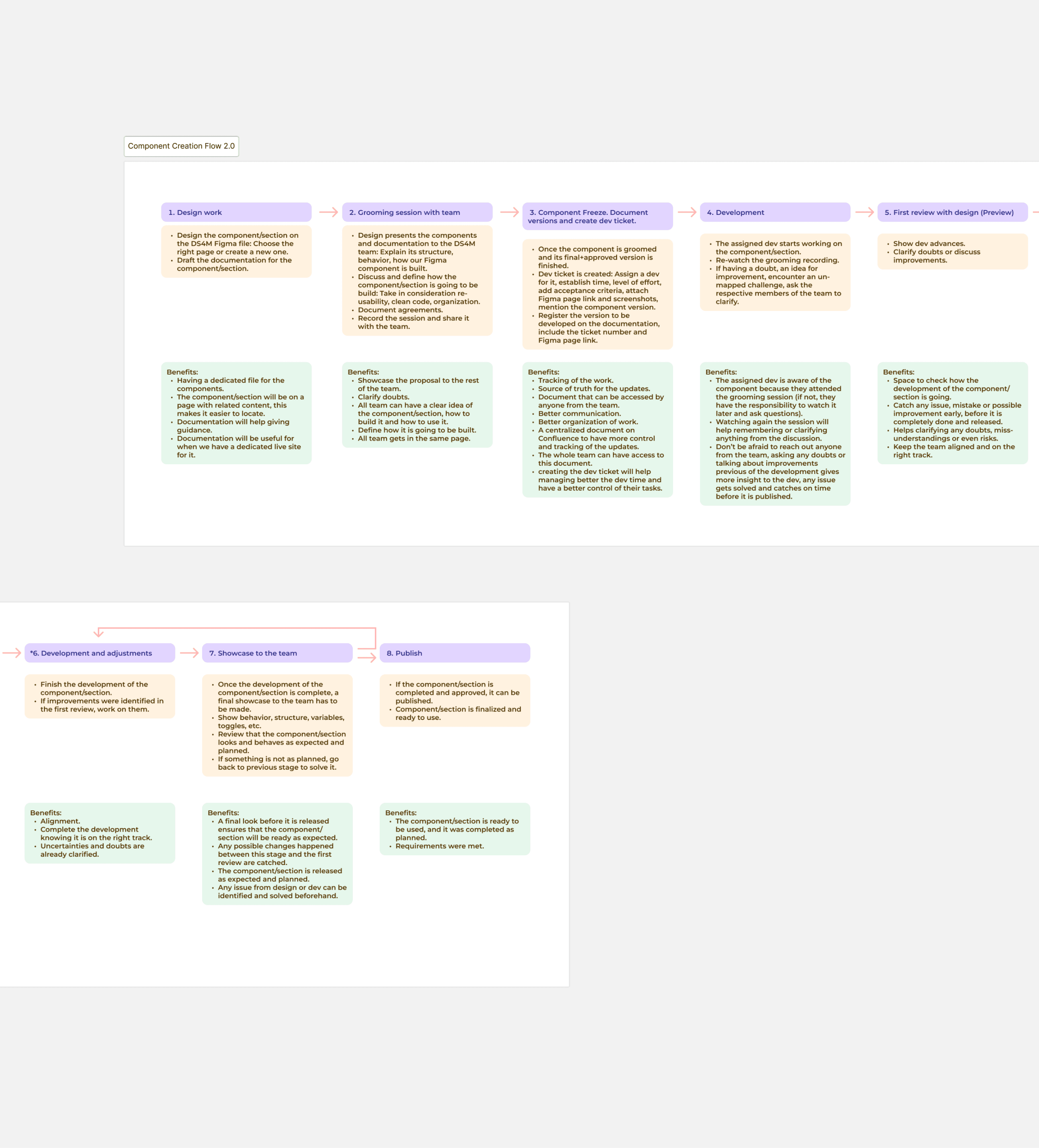
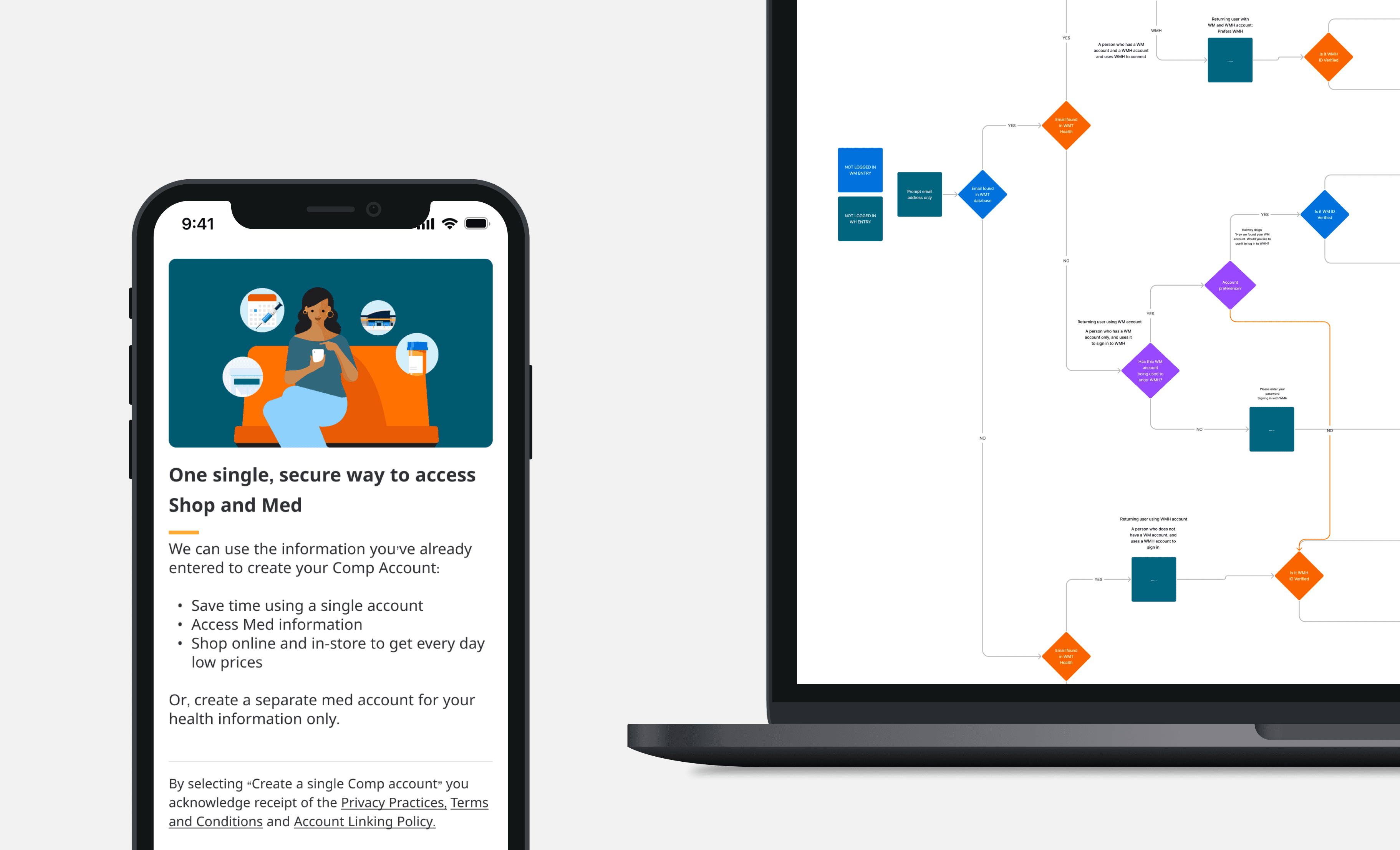
Mapped existing workflows to identify gaps and redundancies
Clarified ownership across key touchpoints and handoffs
Defined more intentional collaboration moments between design, engineering, and PM
Introduced lightweight process refinements to improve predictability and alignment
Rather than imposing change, the focus was on co-creating a clearer operating model that felt natural to the team and supported how they already worked — but with greater structure and visibility.
The Challenge
As the product evolved, the team lacked a defined collaboration framework to support cross-functional work.
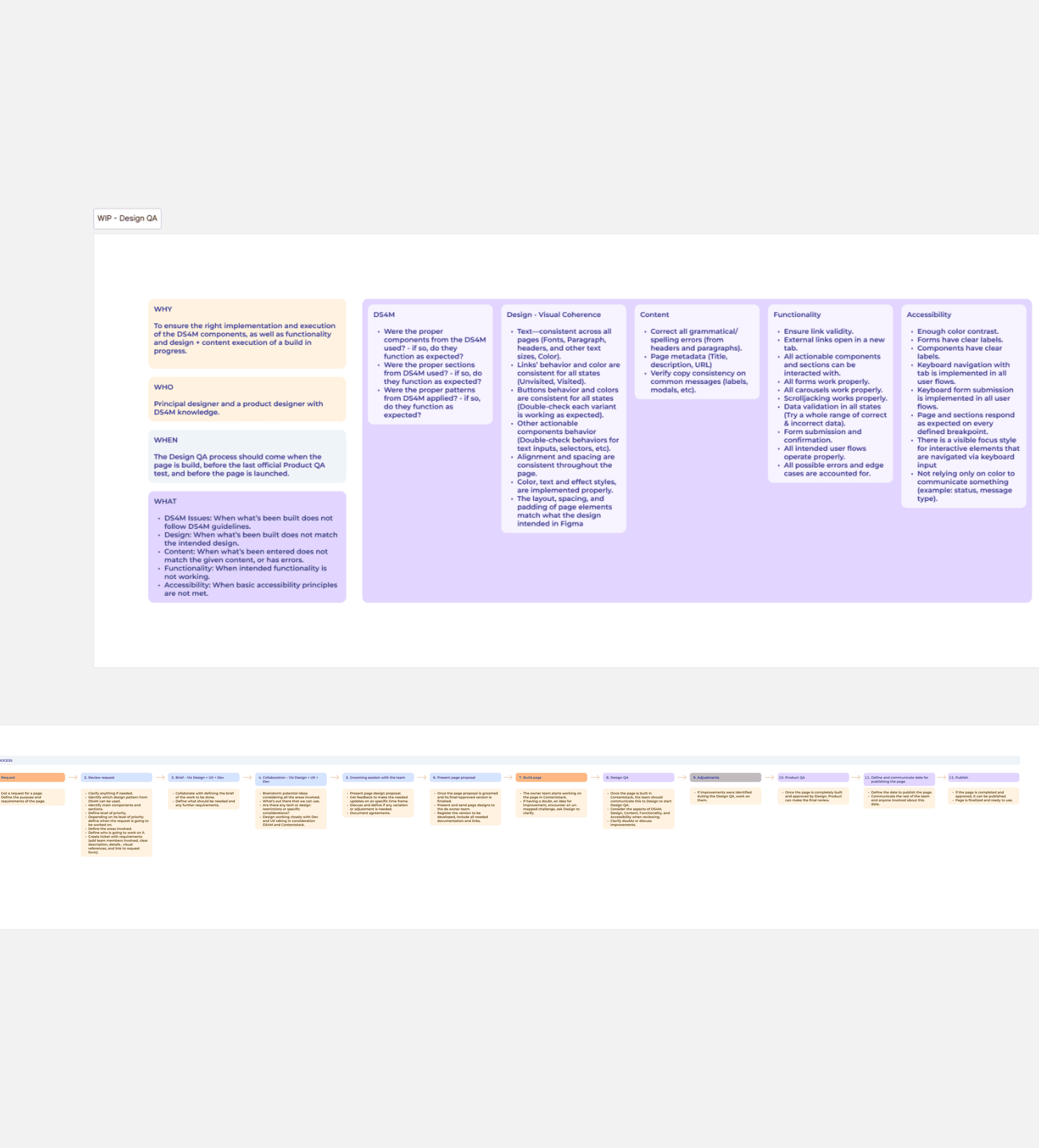
Without clear workflows and ownership models, communication was inconsistent, handoffs were reactive, and delivery lacked predictability. The issue wasn’t talent — it was the absence of an intentional operating structure to support how work moved across design, engineering, and product.
Outcome & Impact
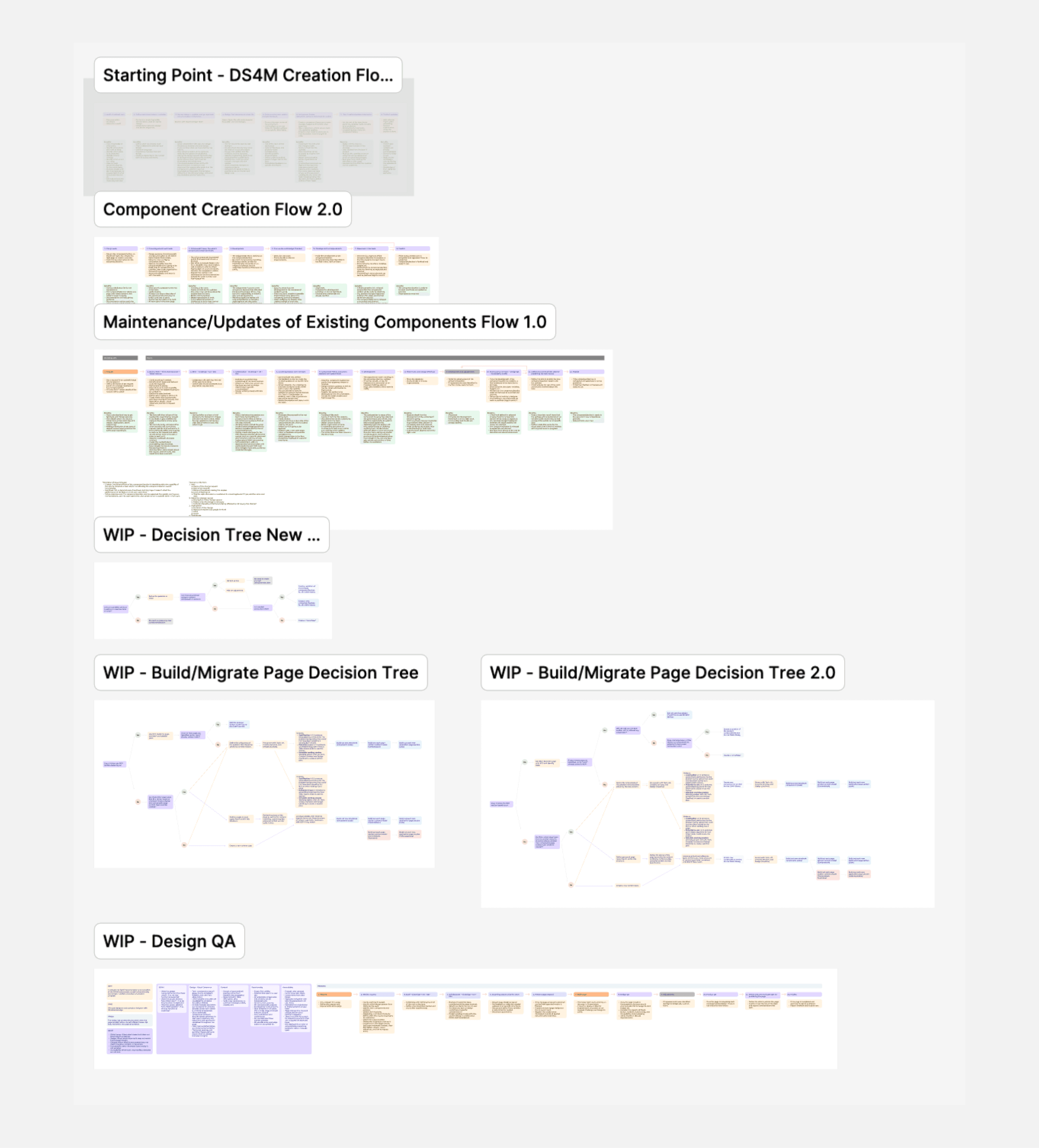
Established five documented, adopted workflows covering critical phases of the product lifecycle.
Clarified ownership and cross-functional touchpoints
Reduced misalignment and rework
Improved delivery predictability and decision-making rhythm
Strengthened accountability across roles
The result was a scalable collaboration model that shifted the team from reactive coordination to structured, sustainable alignment — supporting healthier dynamics and long-term product growth.
More Projects
Product Design
COMMUNICATION & PROCESS OPS
Improving Cross-Functional Communication & Processes
Year :
2024
Industry :
Financial Services
Client :
Corpweb
Project Duration :
2 years
Problem Statement
While design, engineering, and product teams were producing high-quality work, the collaboration framework connecting them was fragmented. Communication gaps, unclear ownership, and inconsistent workflows led to misalignment, rework, and slowed delivery momentum.
Conversations were happening, but not always at the right time, with the right stakeholders, or with shared visibility. As a result, valuable work was often disconnected from broader context, creating friction across disciplines.
Without a structured collaboration model, the team risked inefficiencies, duplicated effort, and reduced cross-functional trust — limiting both velocity and long-term impact.
Opportunity & Approach
Opportunity
Create a more intentional and scalable collaboration framework that would improve visibility, clarify ownership, and strengthen cross-functional alignment — without adding unnecessary process overhead.
The goal was not to introduce rigid structure, but to design a system of touchpoints that supported momentum, accountability, and shared context across design, engineering, and product.
Approach
From there, I:
Mapped existing workflows to identify gaps and redundancies
Clarified ownership across key touchpoints and handoffs
Defined more intentional collaboration moments between design, engineering, and PM
Introduced lightweight process refinements to improve predictability and alignment
Rather than imposing change, the focus was on co-creating a clearer operating model that felt natural to the team and supported how they already worked — but with greater structure and visibility.
The Challenge
As the product evolved, the team lacked a defined collaboration framework to support cross-functional work.
Without clear workflows and ownership models, communication was inconsistent, handoffs were reactive, and delivery lacked predictability. The issue wasn’t talent — it was the absence of an intentional operating structure to support how work moved across design, engineering, and product.
Outcome & Impact
Established five documented, adopted workflows covering critical phases of the product lifecycle.
Clarified ownership and cross-functional touchpoints
Reduced misalignment and rework
Improved delivery predictability and decision-making rhythm
Strengthened accountability across roles
The result was a scalable collaboration model that shifted the team from reactive coordination to structured, sustainable alignment — supporting healthier dynamics and long-term product growth.
More Projects
Product Design
COMMUNICATION & PROCESS OPS
Improving Cross-Functional Communication & Processes
Year :
2024
Industry :
Financial Services
Client :
Corpweb
Project Duration :
2 years
Problem Statement
While design, engineering, and product teams were producing high-quality work, the collaboration framework connecting them was fragmented. Communication gaps, unclear ownership, and inconsistent workflows led to misalignment, rework, and slowed delivery momentum.
Conversations were happening, but not always at the right time, with the right stakeholders, or with shared visibility. As a result, valuable work was often disconnected from broader context, creating friction across disciplines.
Without a structured collaboration model, the team risked inefficiencies, duplicated effort, and reduced cross-functional trust — limiting both velocity and long-term impact.
Opportunity & Approach
Opportunity
Create a more intentional and scalable collaboration framework that would improve visibility, clarify ownership, and strengthen cross-functional alignment — without adding unnecessary process overhead.
The goal was not to introduce rigid structure, but to design a system of touchpoints that supported momentum, accountability, and shared context across design, engineering, and product.
Approach
From there, I:
Mapped existing workflows to identify gaps and redundancies
Clarified ownership across key touchpoints and handoffs
Defined more intentional collaboration moments between design, engineering, and PM
Introduced lightweight process refinements to improve predictability and alignment
Rather than imposing change, the focus was on co-creating a clearer operating model that felt natural to the team and supported how they already worked — but with greater structure and visibility.
The Challenge
As the product evolved, the team lacked a defined collaboration framework to support cross-functional work.
Without clear workflows and ownership models, communication was inconsistent, handoffs were reactive, and delivery lacked predictability. The issue wasn’t talent — it was the absence of an intentional operating structure to support how work moved across design, engineering, and product.
Outcome & Impact
Established five documented, adopted workflows covering critical phases of the product lifecycle.
Clarified ownership and cross-functional touchpoints
Reduced misalignment and rework
Improved delivery predictability and decision-making rhythm
Strengthened accountability across roles
The result was a scalable collaboration model that shifted the team from reactive coordination to structured, sustainable alignment — supporting healthier dynamics and long-term product growth.