Industry
Healthcare / B2B / E-Commerce
Client
CareSmart
CareSmart Unified Login
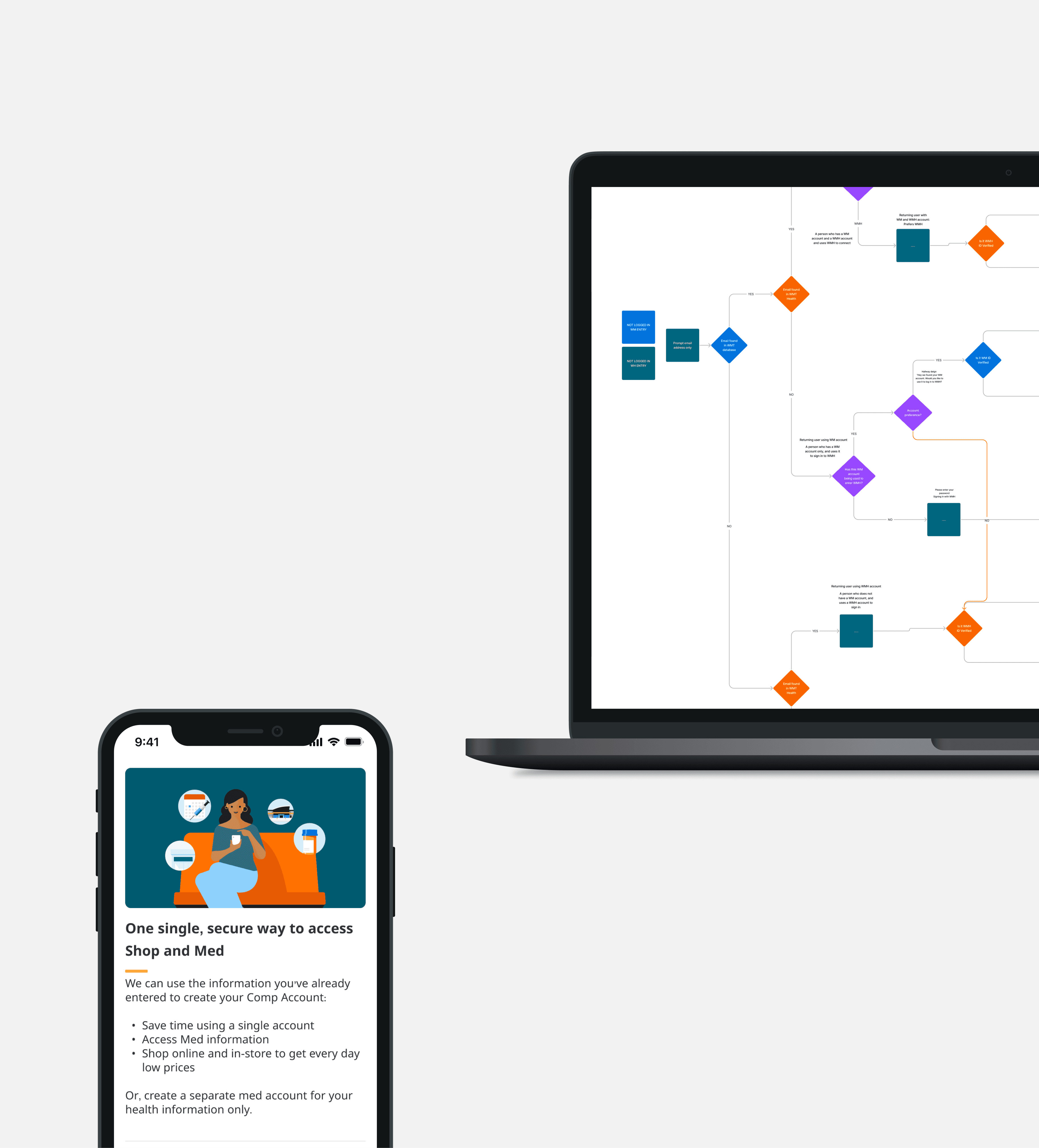
Unified login between health and e-commerce sites
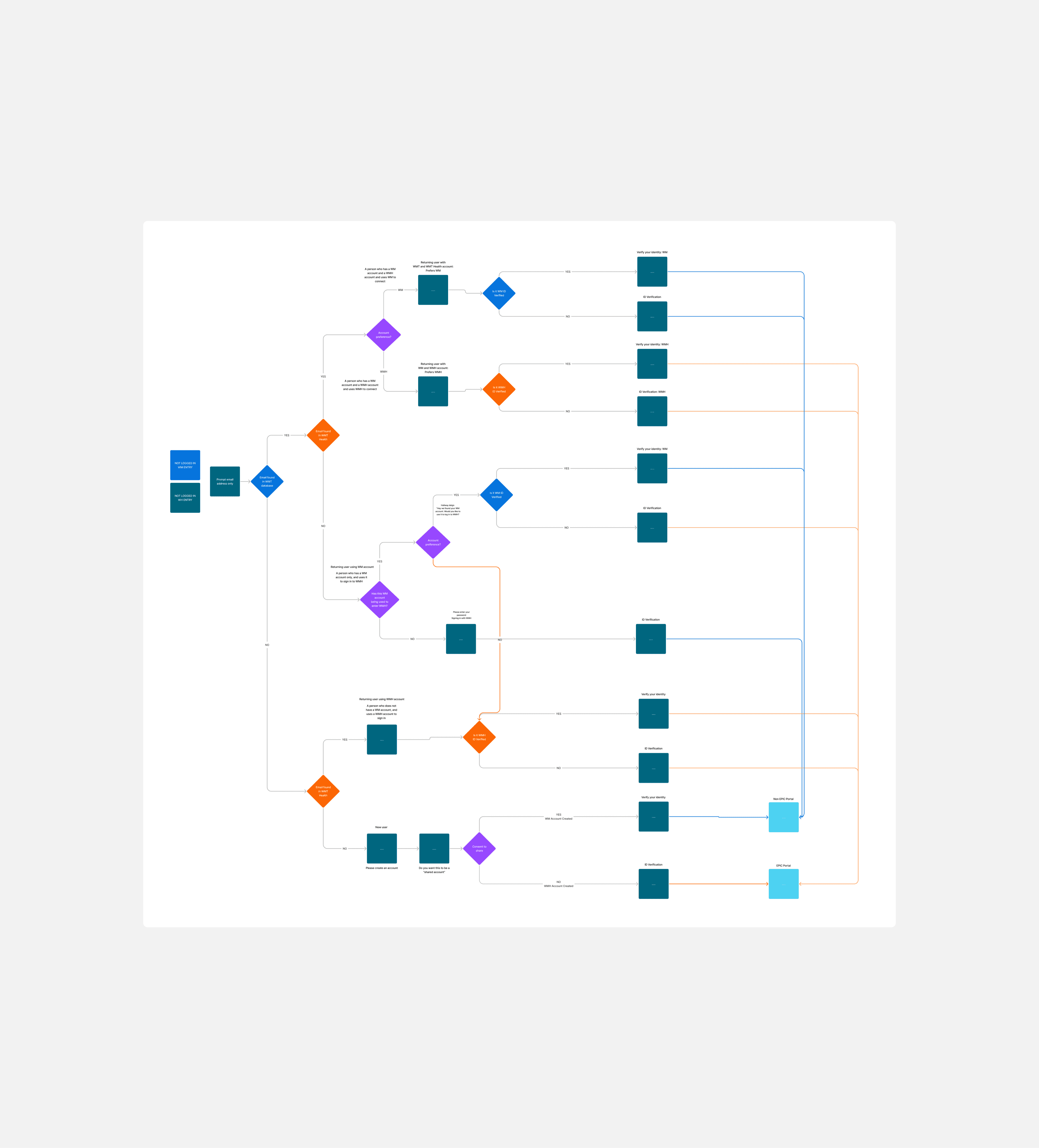
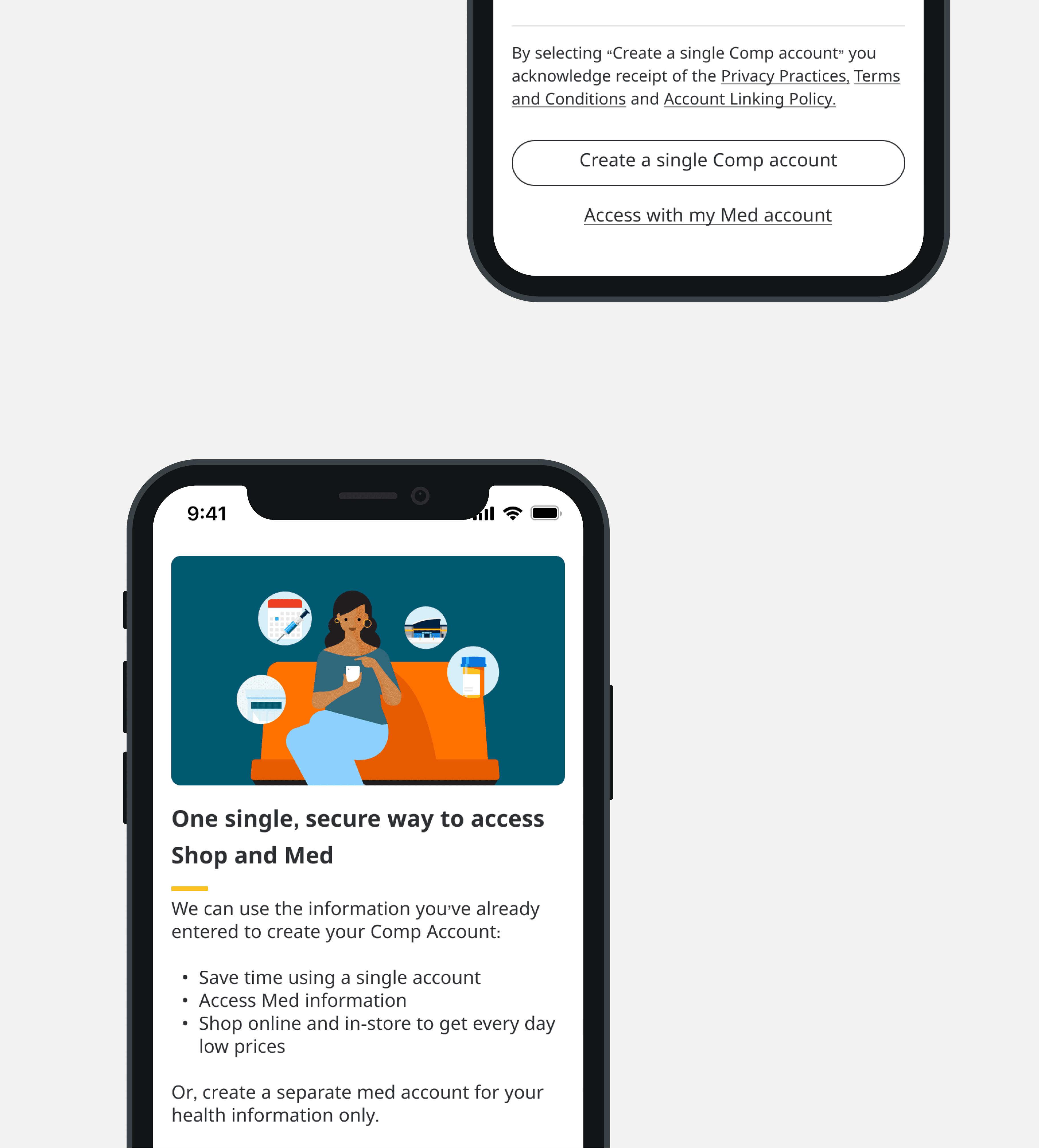
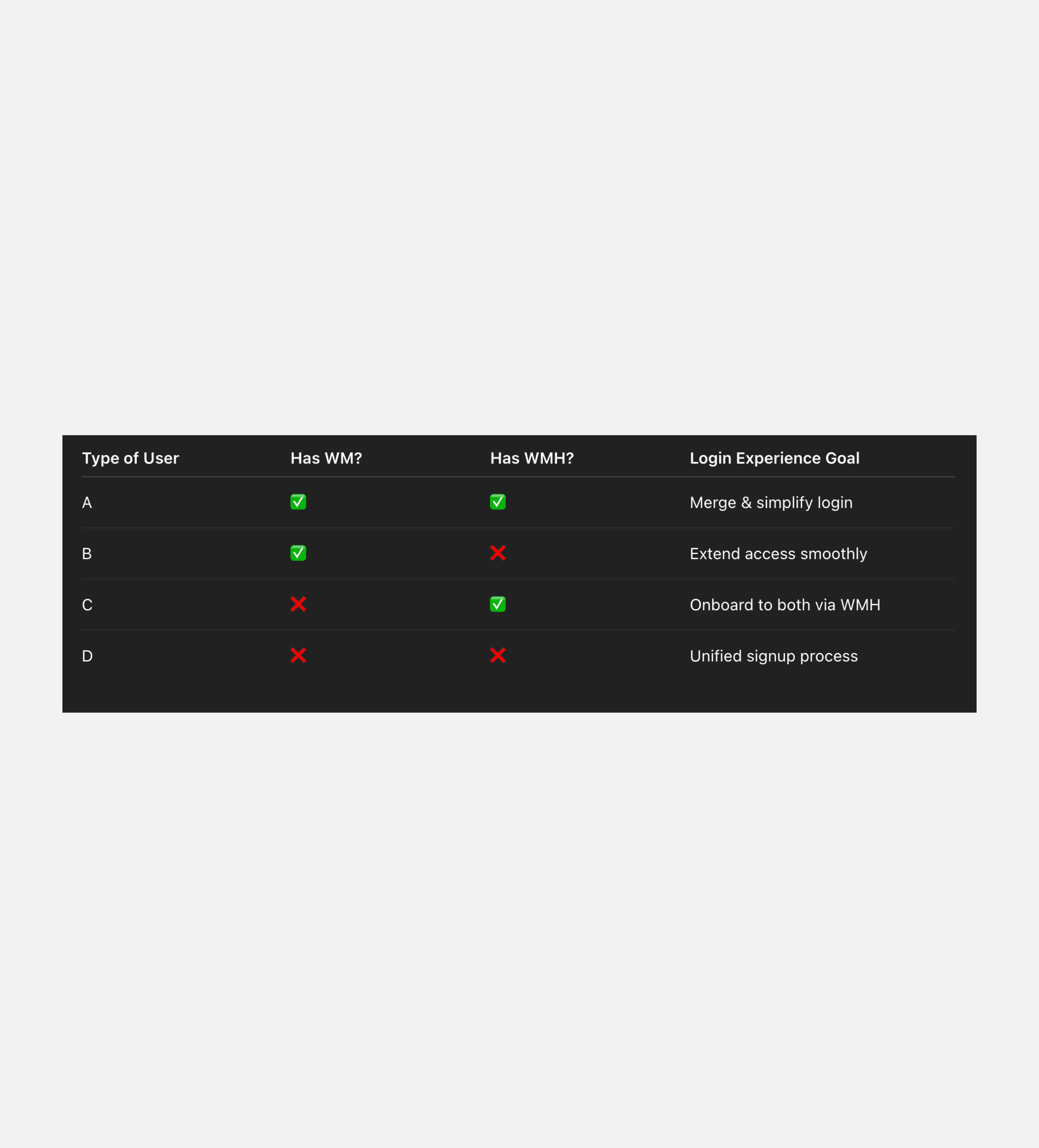
CareSmart’s users faced a fragmented authentication experience: separate retail and health logins caused confusion, duplicate accounts, and access issues. The challenge was to design a unified, intuitive login flow while respecting strict legal, security, and platform constraints (Project: 2023). As the product designer covering a maternity leave, I led early discovery by mapping existing flows, identifying edge cases, and aligning legal, engineering, and design. I explored multiple unification scenarios, defined logic for four user types, and delivered wireframes and prototypes aligned with technical and compliance requirements.
Process & Outcome
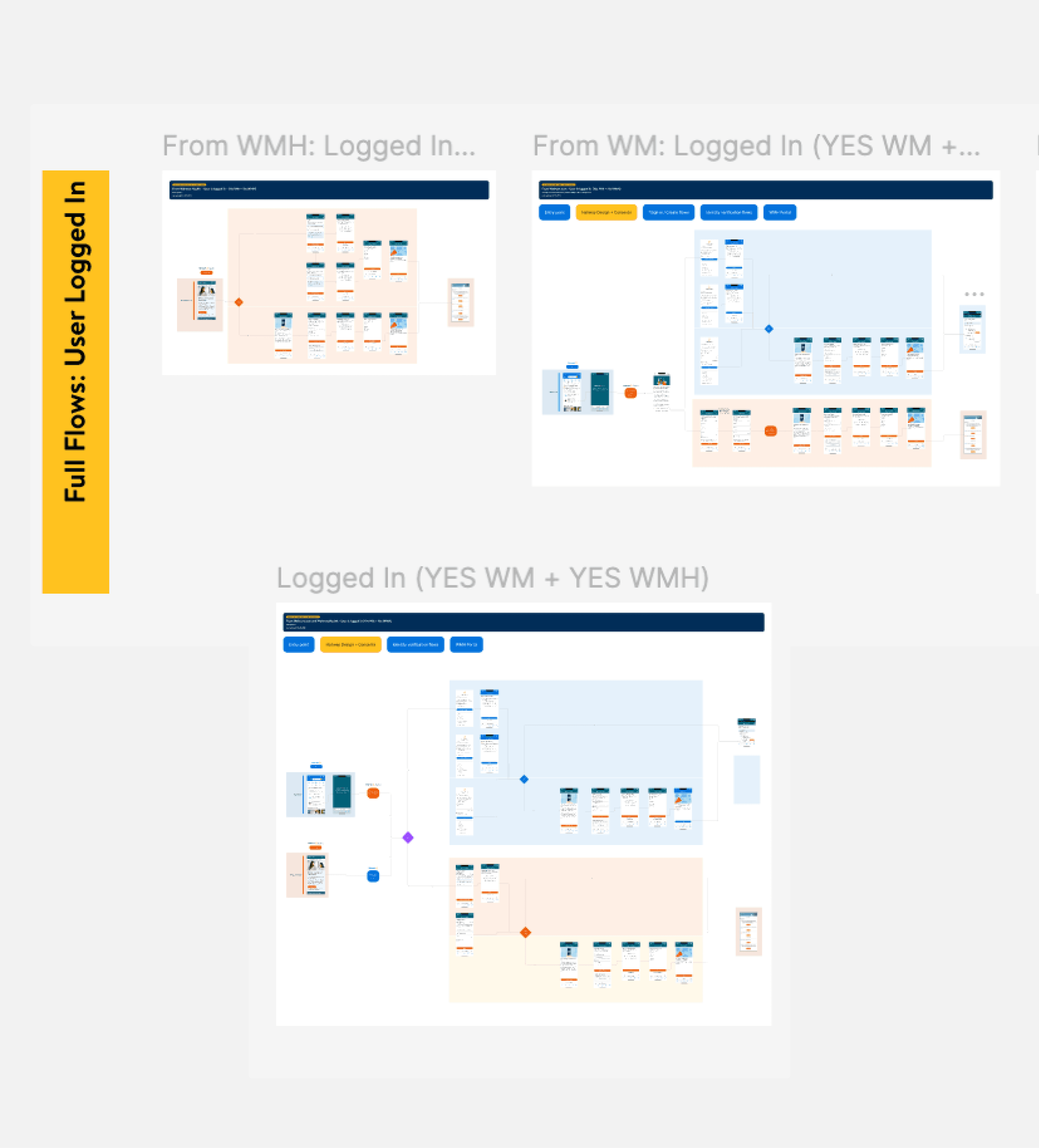
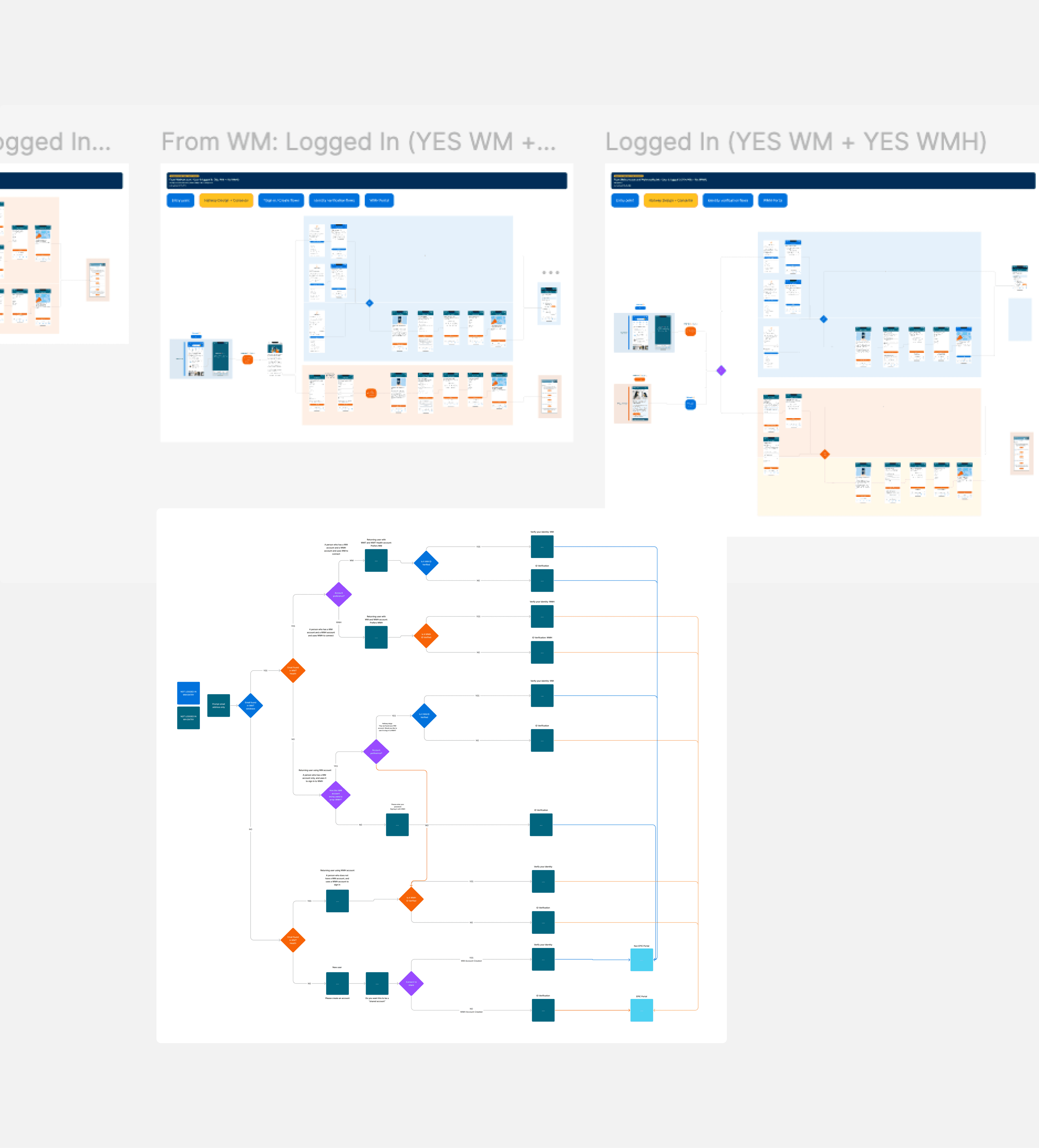
- Understanding the Scenarios - To define a sustainable authentication model, we began by asking foundational questions: Who are the users? Where are they coming from? Why are they logging in? Do they truly need two accounts? Should we offer one unified account or maintain two separate identities? Identifying four distinct user types allowed us to map the real complexity behind Walmart’s login ecosystem. From there, we analyzed the authentication requirements for each scenario and, within the constraints of existing infrastructure, determined what the final UI needed to display at each step. - Process - To move toward clarity, I structured the work around three layers: user experience, technical feasibility, and legal compliance and mapped UX pain points and existing login flows end-to-end. Then explored three authentication strategies: 1. Using Walmart retail login for both platforms. 2. Using Walmart Health login for both. 3. Maintaining two separate accounts depending on user needs. Following this, I initiated and facilitated weekly syncs with legal, engineering, and design. Aligned flows with compliance, backend limitations, and security protocols. Then defined UI variations based on technical constraints and authentication logic. - Cross-Team Collaboration - Early in the project, I identified fragmentation across legal, engineering, and design. To close those gaps, I initiated regular cross-functional sessions where we: 1. Clarified authentication requirements for each user type. 2. Understood legal constraints tied to health data vs. retail data. 3. Evaluated what was technically feasible in the short and long term. 4. Built alignment on the most secure and user-friendly path forward. These weekly check-ins became one of the project’s biggest accelerators — enabling faster decision-making and reducing rework significantly. - Outcome - Before my departure, I delivered a clear, validated direction for the unified login experience: 1. Defined authentication logic for all user types. 2 Secured cross-functional agreement between legal, engineering, and design. 3. Delivered a validated login flow that balanced security, compliance, and usability. 4. Documented decision rationale, key flows, and edge cases. 5. Produced wireframes, prototypes, and design rationale in Figma. 6. Completed handoff with full design specs and next steps for implementation. One of the engineering leads later mentioned: “It’s amazing how in three months we got closer to the solution than we had in much longer before.” - Reflections - This project reinforced how essential true cross-functional collaboration is when designing secure and compliant user flows — especially in high-stakes domains like health. Bringing all leads into the same (virtual) room created alignment, accelerated decisions, and ultimately shaped a solution that respected both the user experience and the regulatory constraints. It was a fast-moving, high-impact challenge that strengthened my systems thinking and my ability to navigate complex product ecosystems.